AI Product Recommendation Engine for Small Retailers
An affordable, self-hosted recommendation system that helps small e-commerce stores compete with Amazon’s personalization.
Intermediate
AI Product Recommendation Engine for Small Retailers
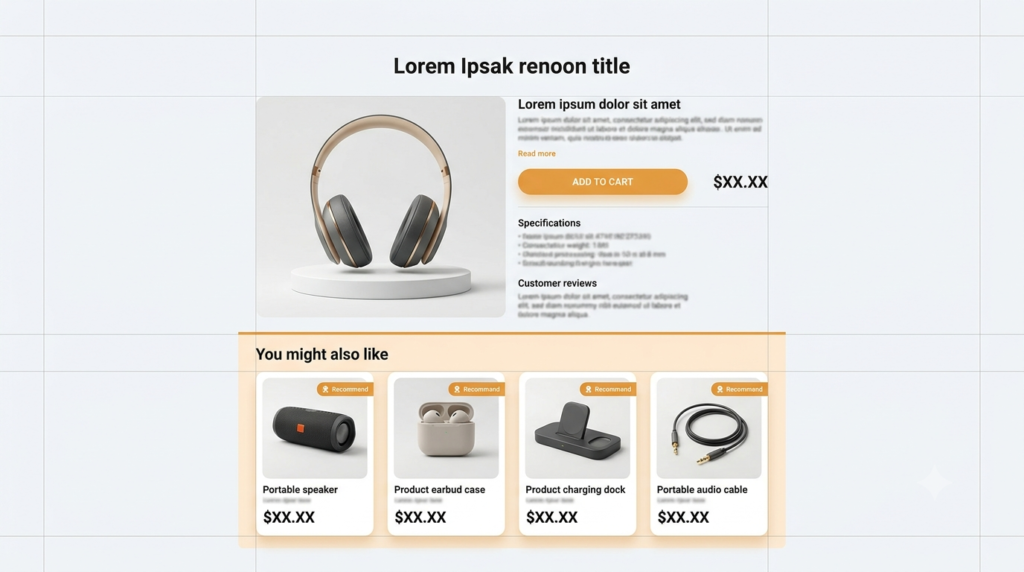
An affordable, self-hosted recommendation engine that gives small e-commerce stores the same product personalization capabilities that large retailers like Amazon use — without requiring a data science team or enterprise budget.
Who Is This For?
Small e-commerce store owners running Shopify, WooCommerce, or custom stores with 100-10,000 products
E-commerce developers building recommendation features for client stores
Marketplace operators who want to improve product discovery without relying on platform algorithms
DTC brands looking to increase average order value through personalized suggestions
The Problem
Product recommendations drive 35% of Amazon’s revenue. Large retailers use sophisticated collaborative filtering and deep learning models trained on billions of interactions. Small retailers — running WooCommerce stores with 500 products or Shopify shops with limited apps — get generic “bestsellers” widgets that treat every visitor the same.
Enterprise recommendation engines (Dynamic Yield, Barilliance, Nosto) cost $500-5,000/month — prohibitive for a store making $10,000-50,000/month. The free alternatives (Shopify’s basic recommendations, WooCommerce plugins) rely on simple rules like “recently viewed” or “also bought” without any personalization.
The gap: small retailers need personalized recommendations that actually increase conversions, but the tools available are either too expensive or too simplistic.
How It Works
The engine uses three recommendation strategies that work together:
Collaborative filtering — “Customers who bought X also bought Y” — learns from purchase patterns across all customers
Content-based filtering — “Similar to what you’re viewing” — recommends products based on category, tags, price range, and product attributes
Session-based recommendations — “Based on your current browsing” — adapts recommendations in real-time based on what the visitor is looking at right now
Recommendation Types
Type
Where It Appears | Data Source
| “You might also like” | Product page | Content similarity + purchase history
“Customers also bought” | Cart/checkout | Collaborative filtering
“Recommended for you” | Homepage | Purchase history + browsing
“Complete the look” | Product page | Complementary product rules
Core Workflow
Store Data → Feature Extraction → Model Training → Real-Time Scoring → Recommendations
Data ingestion — Pull product catalog, purchase history, browsing events, and inventory from the store’s existing platform (Shopify API, WooCommerce REST API, or custom feed)
Feature extraction — Build product embeddings from titles, descriptions, categories, and price. Build user interaction vectors from purchase and browsing history
Model training — Train a lightweight collaborative filtering model (matrix factorization) and content similarity model (TF-IDF + cosine similarity) on the store’s data
Real-time scoring — For each page view, score all products against the current user’s interaction vector and session context
Recommendation serving — Return top-N recommendations via API, rendered as product cards on the store’s frontend
Key Features
Self-hosted — Runs on the retailer’s own infrastructure. No data leaves their servers. No third-party tracking.
Platform-agnostic — Works with Shopify, WooCommerce, Magento, or custom stores via API
Lightweight models — Uses matrix factorization and content similarity, not deep learning. Trains on a single machine in minutes.
Real-time adaptation — Recommendations update during the session based on browsing behavior
Fallback strategies — When there’s not enough data for personalization, falls back to trending products, category bestsellers, or curated collections
A/B testing — Built-in experimentation to measure recommendation impact on conversion
Hosting | Single VPS or Railway | Affordable for small retailers
MVP Scope
Shopify integration (product catalog + purchase history import)
Collaborative filtering model (matrix factorization)
Content-based similarity model (TF-IDF)
“You might also like” widget for product pages
“Recommended for you” section on homepage
Basic analytics dashboard
Implementation Approach
Phase 1: Data Pipeline (Weeks 1-2)
Build the Shopify integration layer. Import product catalog, purchase history, and browsing events. Build the feature extraction pipeline for product embeddings.
Phase 2: Models (Weeks 3-4)
Implement matrix factorization for collaborative filtering. Build TF-IDF content similarity model. Create the model training pipeline with daily retraining.
Phase 3: API + Widgets (Weeks 5-6)
Build the recommendation API with real-time scoring. Create embeddable JavaScript widgets for product pages and homepage. Add A/B testing framework.
Phase 4: Analytics + WooCommerce (Weeks 7-8)
Build the analytics dashboard. Add WooCommerce integration. Implement fallback strategies for cold-start products and new visitors.
Challenges and Tradeoffs
Cold start — New stores with few purchases can’t use collaborative filtering. Mitigate with content-based recommendations and trending products until enough data accumulates.
Data privacy — Self-hosted means the retailer owns the data, but they also bear responsibility for security. Keep PII minimal and encrypted.
Model freshness — Product catalogs change frequently. The model needs regular retraining. Daily retraining is sufficient for most small stores.
Widget performance — The recommendation widget must load fast to avoid slowing down the store. Cache recommendations server-side and serve from CDN.
Why This Idea Is Different
Existing recommendation tools for small retailers are either (1) simple rule-based widgets (Shopify’s built-in, WooCommerce plugins) that don’t personalize, or (2) enterprise SaaS platforms (Dynamic Yield, Nosto) that cost thousands per month.
This Idea is a self-hosted, ML-powered engine that runs on affordable infrastructure and uses techniques proven at scale (matrix factorization, content similarity) without requiring deep learning or GPU resources. The self-hosted model means no monthly fees and complete data ownership.
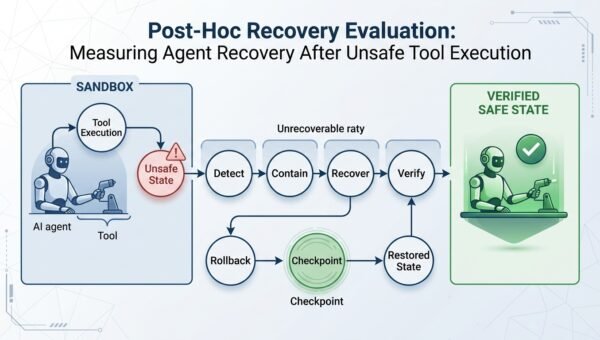
A research project that makes recovery a first-class evaluation object: injecting controlled, sandboxed unsafe-execution events into agent benchmarks and measuring...
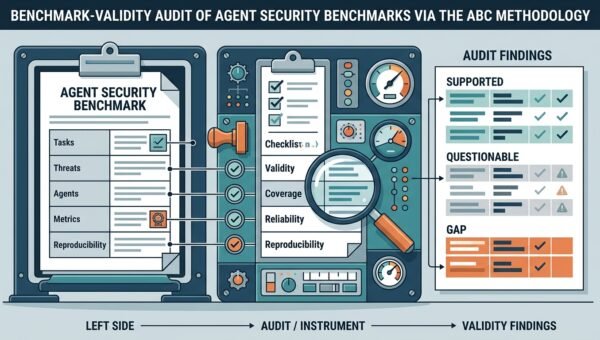
A research project that audits the measurement instruments themselves: applying the ABC validity-checklist methodology to agent-security benchmarks to find task-validity...
A team of developers, researchers, and innovators who review and publish practical ideas for builders and creators.
Published: September 3, 2026
Editorial Note: This idea was reviewed and published by the ItsMyIdeas editorial team. All content is checked for originality, accuracy, and practical value before publication.
A team of developers, researchers, and innovators who review and publish practical ideas for builders and creators.
Published: September 3, 2026
Editorial Note: This idea was reviewed and published by the ItsMyIdeas editorial team. All content is checked for originality, accuracy, and practical value before publication.