An AI tool that reads your API code and generates accurate, up-to-date OpenAPI specs and developer guides automatically.
Intermediate
AI-Powered Documentation Generator for REST APIs
An AI tool that reads your API source code and generates accurate, maintainable OpenAPI specifications and developer-friendly documentation — eliminating the gap between code and docs.
Who Is This For?
Backend developers maintaining REST APIs with outdated or missing documentation
API teams at startups who can’t afford a dedicated technical writer
Open-source maintainers who want to ship docs alongside code without manual effort
DevRel engineers building developer-facing APIs who need consistent documentation
The Problem
API documentation goes stale the moment code changes. Developers update endpoints, add parameters, change response shapes — and forget to update the docs. The result: frustrated API consumers, broken integrations, and support tickets that could have been avoided.
Manual documentation tools like Swagger Editor or ReadMe require developers to write docs by hand, which feels like duplicate work. Existing auto-generation tools (Swagger Inspector, Redocly) parse OpenAPI YAML but can’t read actual source code — they depend on manually authored specs that drift from reality.
The core tension: developers want accurate docs but won’t maintain them manually. Tools that auto-generate from code exist for some frameworks (FastAPI’s built-in OpenAPI, Spring Boot’s SpringDoc), but they produce machine-readable specs, not developer-friendly guides with examples, use cases, and explanations.
How It Works
The tool reads your API codebase — controllers, route definitions, request/response models, middleware, and validation rules — and uses an LLM to generate:
OpenAPI 3.1 specification — accurate endpoints, parameters, schemas, and responses derived from actual code
Developer guide — human-readable documentation with authentication instructions, error handling, example requests, and pagination patterns
Changelog detection — compares current code against the previous documentation version and highlights what changed
Static analysis — Parse the codebase to extract route definitions, HTTP methods, path parameters, query parameters, request bodies, response models, and authentication middleware
AST extraction — Build an abstract syntax tree of API-relevant code. Extract type annotations, validation decorators, and response shape definitions
LLM enrichment — Feed the extracted API structure to an LLM with prompts that generate human-readable descriptions, example payloads, and error explanations
Diff detection — Compare the current extracted spec against the previously generated documentation. Flag additions, removals, and breaking changes
Output — Produce an OpenAPI 3.1 YAML/JSON file and a Markdown developer guide
Example Prompt Chain
For each endpoint, the tool generates:
Endpoint description — What this endpoint does in plain language
Parameter descriptions — What each query/path parameter means and when to use it
Request example — A realistic curl request with sample data
Response example — A realistic JSON response with field explanations
Error scenarios — Common failure modes and how to handle them
Key Features
Multi-framework support — Reads FastAPI, Flask, Django REST Framework, Express.js, and Spring Boot route definitions
AST-based extraction — Parses actual code structure, not comments or docstrings
OpenAPI 3.1 output — Standards-compliant spec compatible with Swagger UI, Redoc, and Postman
Developer guide generation — Human-readable Markdown with examples, not just a raw spec
Change detection — Compares current code against previous docs and highlights breaking changes
Incremental updates — Only regenerates documentation for changed endpoints
CI integration — Runs as a CLI tool or GitHub Action to keep docs in sync with every deployment
Basic change detection against previous generation
CLI tool with generate and diff commands
Implementation Approach
Phase 1: Core Parser (Weeks 1-2)
Build the FastAPI-specific code parser. Extract routes, parameters, request bodies, and response models from Python AST. Generate a raw OpenAPI spec without LLM enrichment.
Phase 2: LLM Enrichment (Weeks 3-4)
Add LLM-powered description generation. Build prompt templates for endpoint descriptions, parameter explanations, and example payloads. Implement developer guide generation.
Phase 3: Change Detection (Weeks 5-6)
Add diff detection against previous documentation versions. Generate changelog reports. Implement incremental regeneration for changed endpoints only.
Phase 4: Multi-Framework (Weeks 7-8)
Extend to Flask, Django REST Framework, and Express.js. Add Tree-sitter for JavaScript/TypeScript parsing. Build framework detection heuristics.
Challenges and Tradeoffs
LLM hallucination — The LLM might invent parameter descriptions that don’t match the code. Mitigate by feeding extracted type information and validation rules as context.
Framework diversity — Each framework structures routes differently. Start with FastAPI (cleanest API surface) and expand incrementally.
Custom middleware — Authentication and authorization middleware affects what the API actually accepts. The parser needs to understand middleware chains.
Dynamic routes — Some APIs use dynamic route registration that static analysis can’t resolve. Document the limitation clearly.
Why This Idea Is Different
Existing tools fall into two categories: (1) auto-generators that parse manually-authored OpenAPI specs (Swagger Inspector, Redocly), producing accurate but shallow output; (2) LLM chatbots that can describe an API if you paste the code, but don’t integrate into a workflow.
This Idea combines static code analysis with LLM enrichment in a CI-integrated pipeline. The key differentiator: it reads the actual source code, not a manually maintained spec. Documentation stays accurate because it’s regenerated from code on every build.
What Similar Tools Exist
Tool
Approach | Limitation
| FastAPI built-in | Auto-generates OpenAPI from code | Only FastAPI. No dev guide.
SpringDoc | Auto-generates OpenAPI from annotations | Only Spring Boot. No LLM.
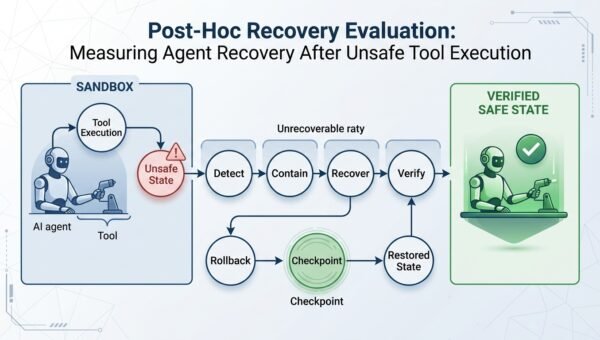
A research project that makes recovery a first-class evaluation object: injecting controlled, sandboxed unsafe-execution events into agent benchmarks and measuring...
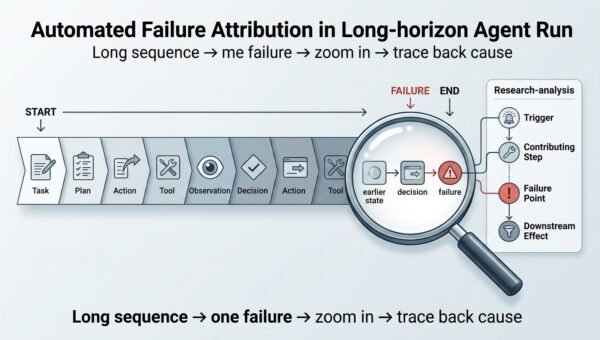
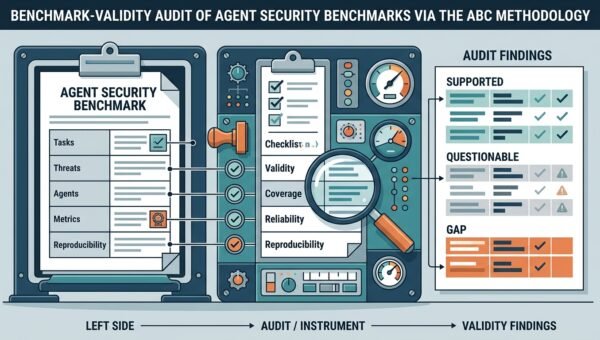
A research project that audits the measurement instruments themselves: applying the ABC validity-checklist methodology to agent-security benchmarks to find task-validity...
A team of developers, researchers, and innovators who review and publish practical ideas for builders and creators.
Published: September 3, 2026
Editorial Note: This idea was reviewed and published by the ItsMyIdeas editorial team. All content is checked for originality, accuracy, and practical value before publication.
A team of developers, researchers, and innovators who review and publish practical ideas for builders and creators.
Published: September 3, 2026
Editorial Note: This idea was reviewed and published by the ItsMyIdeas editorial team. All content is checked for originality, accuracy, and practical value before publication.